


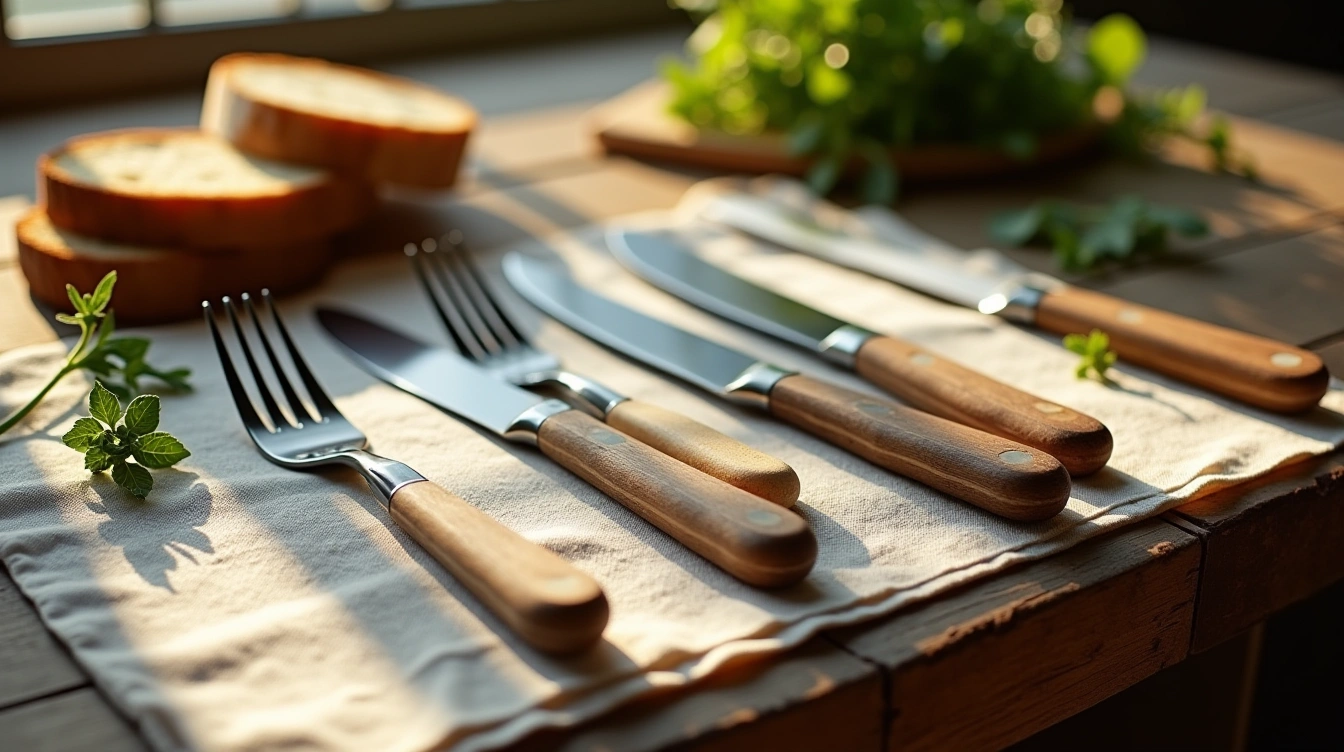
While millions of kitchen knives are sold every year, only a small fraction carry the weight of history, craftsmanship, and soul that defines a truly hand-forged blade. These are not tools churned out by machines, but creations shaped by fire, skill, and decades of tradition. Owning an artisanal knife often feels less like a purchase and more like an inheritance in the making – a piece that bridges generations, designed not to be replaced, but passed down.
The Essence of Artisanal Cutlery in Modern Gastronomy
Cooking with a factory-made knife can feel functional, even efficient. But using a handcrafted blade introduces a deeper connection – one where the act of slicing, dicing, or filleting becomes almost meditative. The balance, the heft, the way it fits your hand: these aren’t accidents. They’re the result of meticulous design tailored to human ergonomics, not assembly-line speed. Artisan cutlery elevates cooking from routine to ritual, turning daily meals into moments of tactile precision.
Also read : How do UK pet laws affect ownership?
A shift toward sensory cooking
When a knife is forged by hand, every curve and contour serves a purpose. Unlike mass-produced models that prioritize uniformity, artisan blades are shaped with attention to how they feel during use. A well-balanced knife reduces wrist strain and enhances control, making repetitive tasks less fatiguing. The materials used – from forged steel to rare wood – transmit subtle feedback, allowing cooks to feel the resistance of ingredients rather than just seeing the cut.
Reliability and the lifetime guarantee
Premium French workshops often back their creations with a lifetime guarantee, a testament to their confidence in durability. This isn’t just marketing – it reflects a different philosophy: one where products are built to last, not to be upgraded. For serious home chefs, this represents a sustainable investment. The ability to repair, resharpen, and restore a knife over decades reduces waste and supports a slower, more intentional way of living. Exploring the world of high-end French cutlery often reveals a deep respect for natural materials – for those curious about these specific techniques, one may Visit this link for more information.
Additional reading : How can UK businesses improve their supply chain efficiency?
The psychological bond with the tool
Professional chefs often form strong attachments to their favorite knives. In high-pressure kitchens, reliability is non-negotiable. A trusted blade becomes an extension of the hand, responding predictably under stress. Custom or artisanal knives offer that certainty – they’re tested, refined, and built without compromise. There’s a quiet confidence in knowing your tool won’t falter mid-service, a reassurance no mass-market knife can quite replicate.
| 🔍 Feature | 🏭 Industrial Blade | 👨🎨 Artisan Blade |
|---|---|---|
| Blade Quality | Consistent but limited by stamping processes | Forged for superior grain structure and edge retention |
| Handle Materials | Plastic, synthetic composites | Natural materials like Morta oak, stabilized burl, or antler |
| Repairability | Rarely repairable; often discarded when damaged | Renewable: handles replaced, blades reprofiled or re-sharpened |
| Longevity | 3-7 years with regular use | Decades, often generations, with proper care |
Tracing the Heritage: From Ancient Techniques to Modern Forging
The roots of French cutlery stretch back centuries, with towns like Thiers and Laguiole becoming synonymous with blade excellence. These regions developed entire ecosystems around knife-making – from metallurgists and forgers to handle carvers and polishers. The methods used were refined over generations, passed down through apprenticeships rather than manuals. Even today, many workshops preserve these techniques, ensuring that each knife reflects a living tradition.
The legacy of tradition in blade making
Traditional forging involves heating steel until malleable, then hammering it into shape – a process that aligns the metal’s grain, enhancing strength and flexibility. This contrasts sharply with stamped blades, which are cut from sheets and lack the same structural integrity. Many artisans still use coal or gas forges, controlling every phase manually. It’s slow work, but it allows for adjustments that machines can’t replicate. The result? A blade with character, not just consistency. The EPV label (Entreprise du Patrimoine Vivant), awarded to select French workshops, recognizes this blend of heritage and excellence.
Materials that Define the Masterpiece
What sets artisanal knives apart isn’t just how they’re made, but what they’re made from. While industrial producers rely on standardized alloys and synthetic handles, artisans seek out rare, expressive materials. Take Morta oak – a thousand-year-old wood preserved in the acidic marshes of Brière. Its density and intricate grain make it ideal for handles, offering both durability and visual depth. Unlike younger woods, Morta doesn’t absorb moisture easily, resisting warping and cracking.
On the blade side, Damascus steel remains a hallmark of mastery. Created by folding layers of high-carbon and low-carbon steel, it produces a distinctive wavy pattern that’s as functional as it is beautiful. Each fold redistributes carbon, creating a blade that’s both hard and resilient. In contrast, modern utility knives sometimes use fiberglass-reinforced nylon for handles – a durable, lightweight option, but one that lacks the warmth and story of natural materials. The contrast underscores a deeper divide: efficiency versus soul.
Technical Mastery: Forging and Finishing
Behind every exceptional knife is a sequence of precise, irreversible decisions. The forging, the grinding, the heat treatment – each step shapes the final performance. Hand-forging allows the smith to control thickness, spine taper, and distal grind with surgical precision. But perhaps the most critical phase is tempering: heating the blade to a specific temperature, then cooling it rapidly. This process locks in hardness while maintaining flexibility. Poor tempering leads to brittleness or softness; perfect tempering ensures the edge stays sharp through hundreds of cuts.
Carbon steel vs Damascus patterns
Carbon steel is prized for its ability to take a razor-sharp edge and hold it longer than most stainless steels. However, it requires maintenance – it can rust if left wet and develops a patina over time. Damascus, while often made from similar steels, adds another dimension: the layered structure can create micro-serrations along the edge, enhancing slicing performance. Visually, the patterns vary wildly – no two blades are identical, making each piece a unique work of functional art.
Heat treatment and edge retention
Artisans often use differential hardening, a technique where the edge is made harder than the spine. This creates a blade that’s tough enough to withstand impact while retaining a keen cutting surface. The exact temperature and duration are closely guarded secrets, honed through years of trial and error. A poorly tempered blade might chip or dull within weeks; a well-treated one can remain serviceable for years with proper sharpening.
The art of the handle assembly
A knife’s handle isn’t just decorative – it’s the interface between human and tool. In premium workshops, handles are shaped to fit the hand naturally, often sanded through multiple grits until glassy smooth. Morta oak, for example, is polished to reveal its deep grain, then treated with natural oils to protect it. The fit is so precise that no glue may be needed – pins or rivets alone secure it. The result? A grip that feels familiar, almost intimate, after just a few uses.
The Contemporary Renaissance of Handcrafted Knives
Once confined to professional kitchens and collectors, artisan cutlery is now finding its way into everyday homes. This resurgence isn’t just about performance – it’s a cultural shift. People are rediscovering the value of objects built to last, rejecting disposable culture in favor of meaningful ownership. From a set of 6 table knives to a French Damascus steel chef knife, these tools are no longer seen as luxuries, but as investments in quality living.
- 🎨 Search for authenticity – Consumers want tools with stories, not serial numbers.
- ⚡ Superior cutting performance – Hand-forged blades offer precision unmatched by mass-produced equivalents.
- 🌱 Environmental sustainability – Repairable, long-lasting knives reduce waste and resource consumption.
- ✨ Aesthetic value – A beautifully crafted knife enhances kitchen decor, doubling as art.
Collector curiosity at international shows
Events like the California Custom Knife Show draw enthusiasts from around the world, eager to see limited editions and one-of-a-kind designs. These gatherings celebrate innovation within tradition – a lock-back pocket knife with hand-engraved bolsters, or a fixed blade forged from meteorite iron. For many, collecting isn’t about hoarding, but about preserving craftsmanship in an age of automation.
The rise of the home chef investment
Home cooks are increasingly willing to spend more for fewer, better tools. Why own ten mediocre knives when one exceptional one can do it all? Sets like the Morta table knives (priced around €640 for six) or the XL Damascus fixed knife (€460) reflect this shift. They’re not impulse buys – they’re decisions made with care, often after research and consultation.
Ethical and local consumption
Labels like the EPV matter because they certify genuine craftsmanship, not just branding. Buying from these workshops supports local economies and keeps rare skills alive. Some even offer open workshops, allowing visitors to witness the forging process firsthand – a transparency that factory brands rarely provide. It’s about knowing who made your knife, and how.
Customization: Tailoring Excellence to the Individual
One of the most personal aspects of artisan cutlery is the ability to tailor it to your needs. A custom fixed blade knife can be shaped to match your grip, weight preference, or intended use – whether boning fish or chopping herbs. This level of personalization turns a tool into a companion, unique in the world.
Choosing the right lock mechanism
For pocket knives, the lock type affects both safety and usability. The lock back mechanism, for instance, uses a spring-loaded bar that snaps into place when the blade is open, preventing accidental closure. It’s simple, reliable, and easy to maintain – ideal for daily carry. Other systems exist, but the lock back remains popular among artisans for its balance of security and elegance.
Engraving and personalized details
Many artisans offer engraving – initials, dates, or even intricate motifs – turning a blade into a keepsake. This goes beyond branding; it’s about embedding memory into metal. A knife gifted for a wedding, engraved with a date, becomes more than a tool. It becomes a vessel for stories.
Maintenance as a ritual
Caring for an artisanal knife isn’t a chore – it’s part of the experience. Oiling the Morta handle, stropping the blade, storing it properly: these small acts foster respect for the object. Unlike factory knives that can be tossed in a drawer, these demand attention. And in that attention, users often find a strange satisfaction – a connection to the object, and by extension, to the craft.
The User’s Inquiries
Is it worth investing in a Damascus blade if I only cook on weekends?
Even occasional cooks benefit from the superior edge retention and balance of a Damascus blade. While the initial cost is higher, the longevity and performance make it a worthwhile investment over time. You’ll sharpen less and enjoy more precision.
I’ve heard Morta wood is thousands of years old; does it require special care?
Morta oak is remarkably stable due to its age and mineralization, but like any wood, it benefits from occasional oiling. A light coat of food-safe mineral oil every few months helps maintain its luster and prevent drying.
Are we seeing a move away from stainless steel in custom cutlery trends?
Stainless steel remains popular for its corrosion resistance, but many artisans and chefs are returning to high-carbon steels and specialized alloys for better edge performance. The trend favors functionality and tradition over low maintenance.